

Forged in the Gaps: The Real Cost of Surviving Healthcare Bureaucracy

There is a moment many people with rare disease and chronic illness eventually reach. It’s the moment you realize your survival depends not only on managing your disease, but on your ability to fight a system that was never built with you in mind.
The unexpected administrative battleground
When I first became a patient, I thought I would be just that, a patient. Show up to appointments, follow my doctors’ recommendations, and focus on getting better. I believed that if my body was failing, the healthcare system would be there to help catch me. You enter patienthood expecting a road to healing. But instead, you are thrown into the trenches and handed an administrative battleground.
Instead, I found myself pulled into a world I never knew existed. A world of prior authorizations, coverage disputes, appeal deadlines, medical records, and endless paperwork. While trying to manage multiple sclerosis and hereditary angioedema, I was also expected to become fluent in bureaucracy. Every approval felt temporary. Every denial carried consequences. Every missed phone call, misplaced document, or administrative error had the potential to delay care or alter the course of my treatment.
One of the hardest lessons I’ve learned is that the trauma of chronic illness rarely comes from the disease alone. Much of it comes from the systems surrounding it.
The business of breaking us
For many people living with rare and chronic diseases, the biggest battle isn’t always happening inside our bodies. It’s happening on hold with an insurance company. It’s buried in mountains of paperwork. It’s hidden behind a denial letter that declares a specialist-prescribed treatment “not medically necessary.” I’ve genuinely come to believe that exhaustion isn’t an unintended consequence of the system. It’s part of the design.

Patients are expected to make phone calls, gather records, submit appeals, and meet impossible deadlines while actively living with serious medical conditions. The process is so repetitive and overwhelming that many people eventually give up. Not because they don’t need treatment, but because they simply have nothing left to give.
Step therapy is downplayed as a "cost-saving measure," when it’s a cruel "fail first" mandate that treats our living anatomy like it is some profit-margin experiment. The system forces us to physically decline on cheaper drugs before giving access to the treatment the doctor actually prescribed. In rare and chronic illness, these delays are rarely harmless, and carry the risk of irreversible damage. Living through that heartbreak is exactly what broke me open and pushed me right into advocacy. I’ve lived through my own symptoms worsening, feeling flares trigger purely from the sheer exhaustion of having to prove my physical reality to a system that could not care less. The deep tragedy is that this fight systematically burns out the exact people who need to speak up the most, making it physically dangerous for our already fragile bodies.
Carrying the weight to capitol hill
When I meet with our legislators at Capitol Hill, whether in person or virtually, I’m not there because it’s fun (although it can be). I’m advocating because I’ve seen what happens when policy decisions fail the people they are supposed to protect. I carry my story with me, but I also carry the stories of countless others. Patients who spent years searching for a diagnosis. Patients whose symptoms were dismissed as anxiety. Patients who lost access to life-saving treatments because of insurance restrictions.
What strikes me most during these meetings is the absolute disconnect between policy and reality. Healthcare policies are often discussed through budgets, regulations, and coverage structures. Those things matter.
But behind every policy is a HUMAN BEING just trying to survive. A person wondering how they will afford their medication. A person trying to keep their trusted specialist. A person choosing between basic necessities and medical care.
The true cost of becoming the voice
What people don’t often talk about is the cost of becoming the voice. Advocacy requires us to repeatedly revisit some of the most painful moments of our lives. We tell our stories again and again, hoping someone with the power to make change will finally listen. We gather records, write appeals, attend meetings, and relive traumas we would rather leave behind. The cruel irony is that the people most qualified to speak about these failures are the exact individuals whose health is most affected by the effort. The physical toll of constantly fighting a
system that defaults to disbelief means that many in our chronic illness community are rendered entirely silent, purely because the strain of standing up becomes too dangerous for their fragile nervous systems.
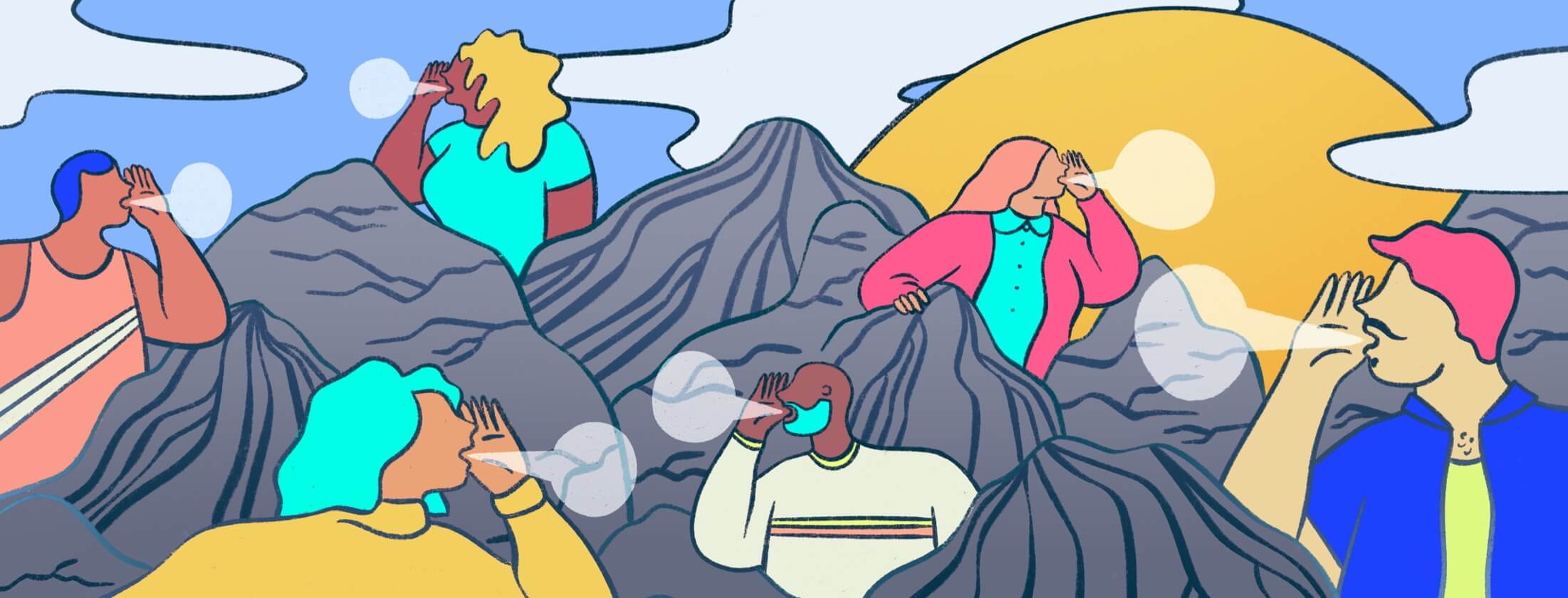
That is why collective advocacy is a sacred obligation—it cannot belong to one person alone. Those of us who are able to speak today do so to stand in the gap and cover for the ones who desperately need to rest. We speak for the patient recovering from surgery. For the person lying in a hospital bed. For every individual who is currently too exhausted, too sick, or too overwhelmed to fight back.
We share our stories because they are evidence. We push for change because preventable harm should never be accepted as normal. We turn our lived experiences into action because silence has never protected us. None of us chose this path. But if the system insists on leaving patients to fall through its cracks, then we will continue to stand in those gaps, speaking for ourselves and for one another until someone finally listens.
Join the conversation